
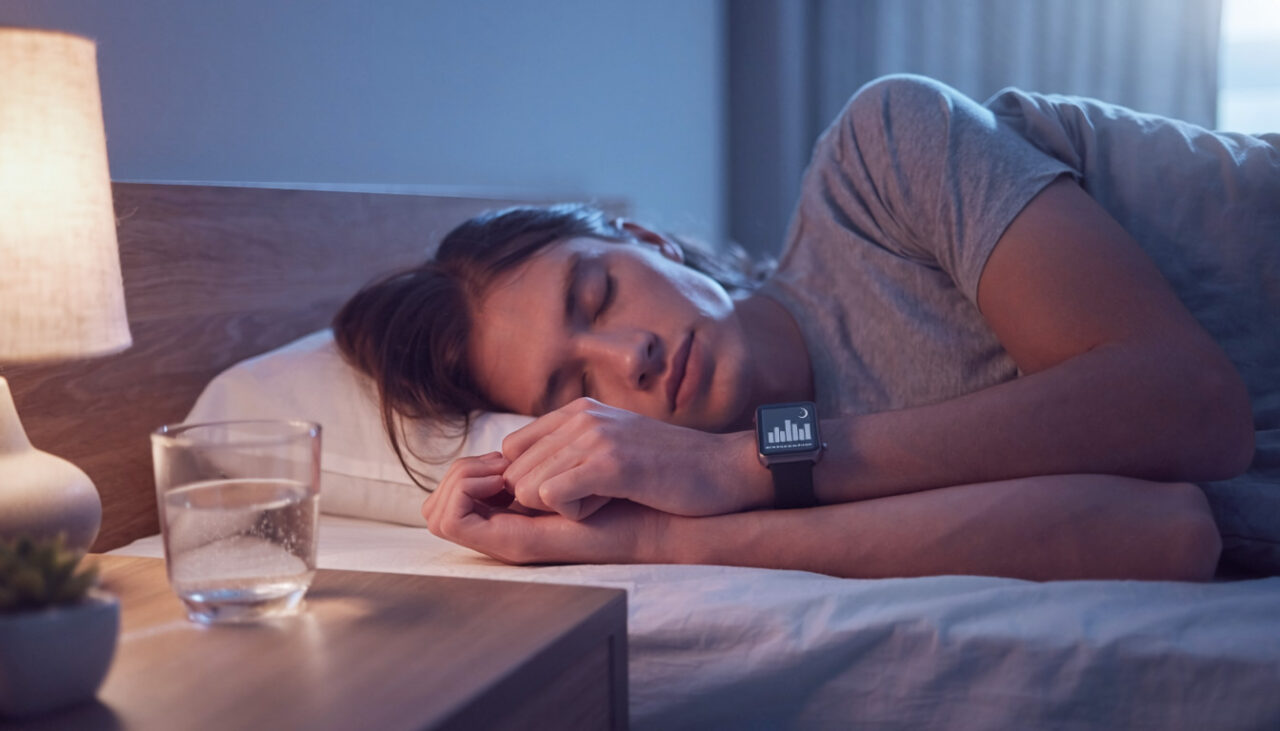

Good sleep restores neurochemical balance, strengthens prefrontal‑amygdala connectivity, and lowers cortisol, which together reduce anxiety (g⁺ ≈ ‑0.51) and depression (g ≈ ‑0.63). Adequate rest also normalizes blood pressure, improves metabolic regulation, and enhances immune competence, lowering cardiovascular disease and infection risk. Dose‑response evidence shows larger sleep gains produce proportionally larger mood improvements. Simple hygiene changes—fixed bedtime, screen‑free wind‑down, and a cool, dark bedroom—can yield measurable mental‑health benefits. Further details on measurement tools and integrated care models follow.
Key Takeaways
- Poor sleep increases odds of frequent mental distress 2.5–3 fold and raises depression risk tenfold.
- Restorative sleep boosts neurochemical balance, lowers cortisol, and restores serotonin, dopamine, and GABA levels.
- Adequate sleep enhances prefrontal‑amygdala connectivity, improving emotional regulation and reducing anxiety and rumination.
- Quality sleep supports behavioral activation and engagement in rewarding activities, mitigating depressive withdrawal.
- Consistent bedtime routines, stable circadian timing, and a quiet, cool environment improve sleep quality and lower both mental‑health and cardiovascular risk.
Why Good Sleep Is Critical for Mental‑Health Well‑Being
Because restorative sleep underpins emotional regulation, its enhancement yields measurable improvements in mental‑health outcomes.
Meta‑analysis of 65 randomized trials (N = 8,608) demonstrates that better sleep produces a medium reduction in composite mental‑health distress (g⁺ = ‑0.53) and a dose‑response pattern, where larger sleep gains correspond to greater health benefits.
Interventions that improve sleep quality achieve substantial effect sizes (g⁺ = ‑1.07) and lower rumination (g⁺ = ‑0.49).
These findings align with epidemiological data linking inadequate sleep to a threefold increase in frequent mental distress and a ten‑fold rise in depression risk.
The review also highlights that dose‑response effects were observed, with greater improvements in sleep quality leading to larger reductions in mental‑health symptoms.
Sleep improvements also significantly reduce anxiety (g⁺ = ‑0.51).Inadequate sleep is associated with a 2.5‑fold higher odds of frequent mental distress in US adults.
How Sleep Directly Reduces Depression and Anxiety
Restorative sleep directly attenuates depression and anxiety by improving neurochemical balance and reducing maladaptive emotional regulation. Empirical data show that higher sleep quality predicts lower anxiety (β = 0.712) and depression (β = 0.867) scores, with significant correlations (r ≈ 0.5). Enhanced sleep restores serotonin, dopamine, and GABA production, counteracting cortisol spikes and receptor desensitization that otherwise amplify mood disorders. Concurrently, better sleep fosters behavioral activation, encouraging engagement in rewarding activities that break cycles of withdrawal. Meta‑analyses of 54 RCTs confirm that interventions such as CBT‑I produce 41 % depression and 34 % anxiety reductions, mediated partly by diminished maladaptive cognitive‑emotion strategies. Consequently, neurochemical changes and behavioral activation together explain sleep’s direct, protective effect on mental health. Moreover, the study found that maladaptive CERS mediates the impact of poor sleep on both anxiety and depression. Shift work is linked to a threefold increase in depression and anxiety risk. high stress prevalence.
Why Poor Sleep Amplifies Negative Emotional Reactions for Mental Health
The protective effects of restorative sleep on depression and anxiety reverse when sleep quality declines, exposing a cascade of neurobiological and cognitive deficits that heighten negative emotional reactions. Sleep loss weakens functional connectivity between the prefrontal cortex and amygdala, producing an amygdala disconnect that limits top‑down regulation.
Consequently, cognitive control diminishes, and reappraisal failure becomes common; individuals cannot reframe negative events, leading to amplified emotional intensity. Empirical studies show that poorer self‑reported sleep predicts markedly lower reappraisal scores, even after adjusting for age, affect, and mood disorders.
Daytime dysfunction mediates this relationship, compounding self‑control deficits and further eroding regulation capacity. The resulting feedback loop entrenches heightened negativity, undermining mental health and weakening the sense of communal belonging. REM sleep is specifically linked to the down‑regulation of arousing emotions through reduced noradrenaline activity. daytime dysfunction is a key mediator linking poor sleep quality to increased emotion regulation difficulties.
How Larger Improvements in Sleep Quality Lead to Bigger Mood Boosts
When sleep quality improves, mood enhancements increase in a dose‑responsive manner, as demonstrated by a meta‑analysis of 72 interventions that consistently linked larger sleep gains to proportionally larger reductions in depressive and anxiety symptoms. The data reveal a graded relationship: each incremental advance in sleep neuroplasticity and circadian alignment yields measurable mood uplift, with medium‑sized effect sizes for depression (g = ‑0.63) and small‑to‑medium effects for anxiety (g = ‑0.50). Larger improvements produce greater declines in symptom severity, confirming causality beyond mere correlation. Across composite mental‑health outcomes, the dose‑response pattern persists, indicating that individuals who achieve substantial sleep enhancement experience stronger, more stable positive affect and reduced emotional volatility. This evidence supports prioritizing sustained sleep quality gains for collective well‑being. Propensity score matching was recommended to control for confounders when assessing day‑to‑day sleep–mood links.
Practical Sleep‑Hygiene Tweaks for Immediate Mental‑Health Benefits
Consistently keeping a fixed bedtime and wake‑up time stabilizes the circadian rhythm, a factor shown to lower depression risk by nearly 20 % in large‑scale epidemiological studies. Evidence indicates that adding calming bedtime rituals—such as a brief screen‑free wind‑down, deep‑breathing, or progressive muscle relaxation—further shortens sleep onset and reduces racing thoughts.
Bedroom decluttering, combined with a cool, dark, quiet environment, minimizes external arousal cues and correlates with lower daytime sleepiness and improved mood stability. Eliminating caffeine, heavy meals, and alcohol at least six hours before sleep prevents fragmentation, while keeping the sleep space dedicated solely to rest reinforces psychological boundaries. Together, these targeted sleep‑hygiene adjustments produce measurable mental‑health benefits within days, fostering a sense of community belonging through shared healthy habits.
How to Measure Sleep Gains With Simple Tools and Metrics
Improving sleep hygiene yields tangible benefits, but quantifying those gains requires reliable measurement. Researchers recommend combining objective wearable feedback with subjective sleep journaling to capture both physiological and behavioral shifts.
Wearable trackers such as the Oura Ring, Apple Watch, and Polar A300 record total sleep time, stage distribution, heart rate, and oxygen saturation, each demonstrating strong correlations (0.71‑0.76) with polysomnography for efficiency and duration.
Complementary sleep diaries log caffeine, alcohol, and bedtime routines, enabling pattern detection across weeks. Standardized scales—PSQI, MFI‑20, and SQS—provide validated self‑report scores that align with longitudinal device data.
Integrating Sleep Interventions Into Everyday Mental‑Health Care
Integrating sleep interventions into routine mental‑health care leverages robust evidence that behavioral and cognitive strategies can simultaneously enhance sleep quality and reduce depressive and anxiety symptoms. Clinicians can embed CBT‑based insomnia protocols, stimulus‑control techniques, and mindfulness practices within standard therapy sessions, creating a seamless therapeutic flow.
Integrated referrals enable primary‑care and mental‑health providers to coordinate digital CBT access, reducing cost and improving outcomes for comorbid conditions. Collaborative training equips therapists, nurses, and case managers with shared competencies, ensuring consistent delivery of multicomponent interventions across settings.
Evidence from meta‑analyses of over ten thousand participants demonstrates that such coordinated approaches produce clinically meaningful reductions in depression (MD –2.92) and anxiety (MD –1.14). This model fosters a sense of community among providers and patients, reinforcing adherence and collective well‑being.
Physical Health Benefits of Better Sleep and Their Impact on Mental Well‑Being
Through robust clinical data, better sleep emerges as a cornerstone of physical health, directly influencing cardiovascular stability, metabolic regulation, immune competence, cognitive performance, emotional balance, and weight control.
Adequate rest enhances cardiovascular resilience by normalizing blood pressure and reducing coronary disease risk, while supporting metabolic regulation that mitigates type 2 diabetes and facilitates weight management.
Immune competence strengthens, decreasing infection susceptibility and accelerating physical recovery.
Cognitive gains—improved attention, memory, and decision‑making—translate into emotional stability, lowering depression and anxiety prevalence.
Together, these physiological improvements foster a sense of belonging within health‑focused communities, reinforcing adherence to sleep‑friendly habits and amplifying overall mental well‑being.
References
- https://pubmed.ncbi.nlm.nih.gov/34607184/
- https://www.cdc.gov/pcd/issues/2021/20_0573.htm
- https://pmc.ncbi.nlm.nih.gov/articles/PMC12400548/
- https://www.columbiapsychiatry.org/news/how-sleep-deprivation-affects-your-mental-health
- https://www.mentalhealth.org.uk/explore-mental-health/publications/sleep-matters-impact-sleep-health-and-wellbeing
- https://www.sleepfoundation.org/mental-health
- https://pmc.ncbi.nlm.nih.gov/articles/PMC8651630/
- http://www.sleepmedres.org/journal/view.php?doi=10.17241/smr.2024.02264
- https://www.michiganmedicine.org/health-lab/link-between-sleep-and-mental-health
- https://sleep.hms.harvard.edu/education-training/public-education/sleep-and-health-education-program/sleep-health-education-87