
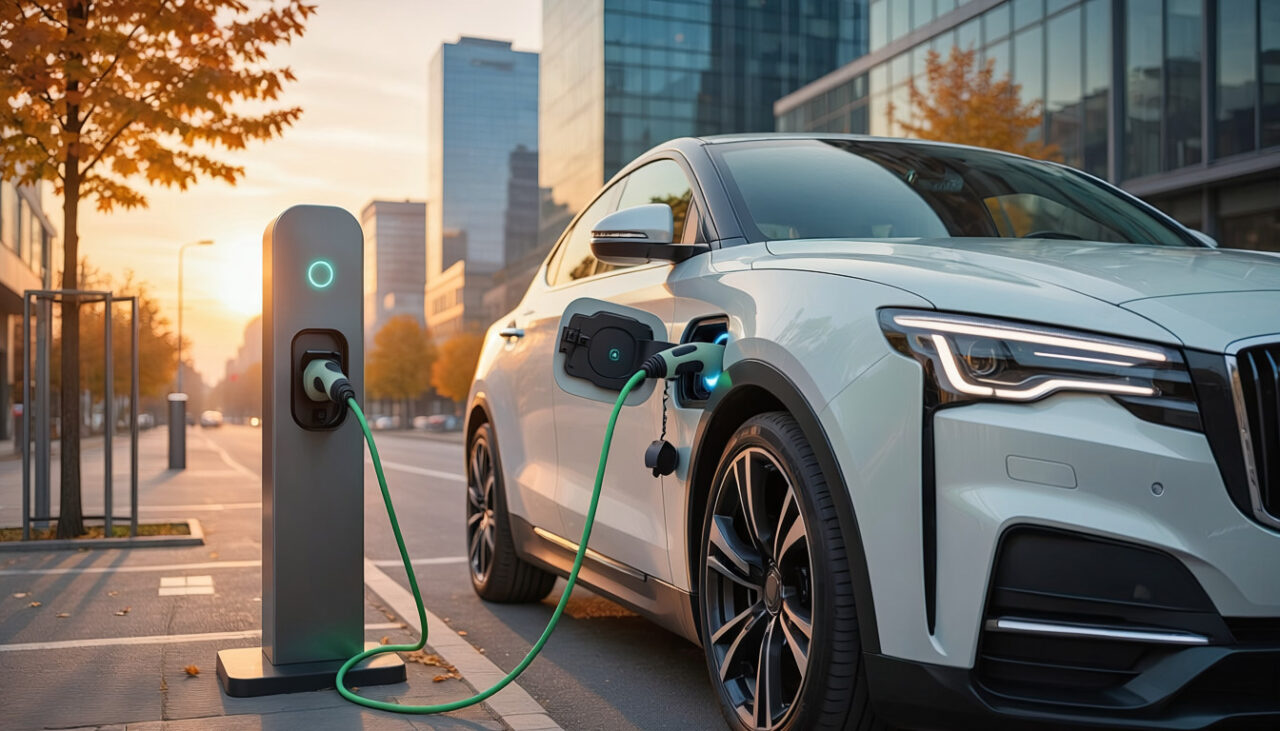

Understanding EV adoption begins with charging options: Level 1 (120 V) adds 2–5 mi/hr, while Level 2 (240 V, 7–11 kW) supplies 10–30 mi/hr and reaches 80 % in 4–10 hours, making it ideal for daily commutes. Home installations require a dedicated 70‑amp dual‑pole circuit, a NEMA 14‑50 receptacle or hard‑wire, and a qualified electrician’s permit. Public stations follow NACS or CCS standards, with ADA‑compliant spacing and signage. Ownership costs combine MSRP, federal tax credits, and $0.12–$0.15 /kWh home energy versus higher public rates. Battery size should match typical trips, accounting for 20–30 % winter loss. Permits, utility coordination, and grid capacity checks guarantee reliable service, and further details will clarify each step.
Key Takeaways
- Assess daily driving distance and choose a battery size that meets typical trips, accounting for winter range loss of 20‑30%.
- Install a Level 2 home charger (240 V, 7‑11 kW) for reliable daily replenishment; Level 1 is too slow for regular use.
- Verify your home’s electrical capacity (usually 200 A) and obtain necessary permits and inspections for a dedicated 50‑amp circuit.
- Factor in total cost of ownership: MSRP minus federal/state incentives, plus home electricity ($0.12‑$0.15/kWh) versus higher public fast‑charging rates.
- Ensure charger site meets ADA accessibility standards and coordinate with utilities early to avoid grid overload issues.
Compare EV Charging Levels for Daily Driving
By contrast with Level 1’s modest 120 V outlet, Level 2 charging delivers 240 V power that can add 10–30 miles of range per hour, making it six to eight times faster for daily restoration.
For home charging, Level 1 relies on existing outlets, providing 2‑5 miles per hour and requiring 40‑50 hours to reach 80 % on a BEV, suitable only for occasional top‑ups or emergencies.
Level 2, typically installed at 240 V with 7‑11 kW, supplies 10‑30 miles per hour, achieving 80 % in 4‑10 hours and comfortably covering ordinary commutes.
Proper charging etiquette—plugging in after work, avoiding unnecessary idle time, and respecting shared circuits—maximizes efficiency and fosters a cooperative community of EV owners.
This contrast underscores Level 2 as the preferred solution for reliable, consistent daily range restoration.
Using a dedicated 240 V circuit is essential for safe and efficient Level 2 operation.
Level 2 chargers often include software for intelligent charging and power adjustments.Level 1 chargers are typically included with the vehicle purchase and require no special installation.
Upgrade Home Electrical System for Level 2 EV Charging
Evaluating a home’s electrical capacity is the first step toward installing a Level 2 EV charger. A qualified electrician conducts electrical audits to verify that the service panel—typically 200 amps with two vacant double‑pole slots—can accommodate the dedicated 240‑volt circuit required. If the existing panel is only 100 amps, the audit assesses appliance loads and may recommend a modest upgrade or load‑management system. NEC Article 625 mandates a dedicated dual‑pole circuit, often a 70‑amp breaker for a 50‑amp charger, rated at 125 % of continuous draw. Proper outlet placement follows the charger’s location, using a NEMA 14‑50 receptacle or hard‑wired connection. Permits, inspections, and adherence to local codes guarantee safety and community standards, allowing owners to join the growing network of responsible EV households. State incentives can offset the cost of purchasing and installing the required equipment. EV charging standards apply to both residential and commercial installations. The J1772 connector is compatible with virtually all Level 2 chargers.
Review Public EV‑Charging Standards and Plug Types
After confirming that a home’s electrical service can support a Level 2 charger, attention shifts to the standards governing public charging infrastructure and the plug types they employ.
In the United States, the North American Charging Standard (NACS) is expanding as Ford, GM, Rivian, Volvo, Mercedes‑Benz, Hyundai and Kia integrate its connector, and adapters now permit non‑Tesla vehicles to use Tesla Superchargers.
Simultaneously, the Federal Highway Administration mandates CCS Type 1 on every DC fast‑charging port along Alternate Fuel Corridors, with a minimum of four network‑connected ports per station and ISO 15118 compliance for hardware conformance.
The 2026 NEC adds a 5‑mA GFCI trip threshold, influencing station reliability.
These policies reinforce charging interoperability and illustrate connector evolution, ensuring consistent plug types, power levels, and a reliable experience for all EV drivers. Qualified‑installer requirement may limit DIY installations of hard‑wired chargers. licensed‑electrician requirement will likely reduce homeowner DIY installs. The industry is shifting from sheer charger count to better reliability across networks.
Calculate EV Ownership Cost: Purchase, Incentives, Energy
Evaluating the true cost of owning an electric vehicle requires aggregating the sticker price, applicable incentives, and ongoing energy expenses into a single metric. A total cost breakdown begins with MSRP: the 2027 Chevrolet Bolt EV starts at $28,995, the 2026 Nissan Leaf at $31,535, and the 2025 Hyundai Kona Electric at $34,470, while the average new EV price in December 2025 was $62,426.
Incentives timing is critical; federal tax credits for under‑$50,000 models can reduce effective purchase price by several thousand dollars, and price cuts such as the Ioniq 5’s $7,600 discount further improve value.
Energy expenses split into home vs. away energy: home charging typically costs $0.12‑$0.15 kWh, whereas public fast‑charging can exceed $0.30 kWh.
This nuanced breakdown enables prospective owners to compare EVs with conventional vehicles and feel confident within a cost‑aware community. C/D Rating shows the 2027 Chevrolet Bolt EV ranks #1 among best electric subcompact SUVs.
Match EV Battery Size to Your Commute Needs
With a clear understanding of daily mileage, drivers can align electric‑vehicle battery capacity to real‑world commute requirements. Short trips under 50 mi are comfortably served by 40‑55 kWh packs, which yield 150‑230 mi EPA range and reserve a buffer against battery degradation.
Average U.S. commutes of 30‑40 mi benefit from 60‑77 kWh batteries, delivering 230‑320 mi and accommodating seasonal range reductions of 20‑30 % in winter.
For daily drives exceeding 100 mi, 80 kWh or larger packs provide 280‑380 mi, ensuring sufficient margin despite cold‑weather losses.
Prospective owners should calculate required range by dividing battery capacity (Wh) by expected consumption (Wh/mi), then select a size that matches both routine mileage and anticipated seasonal range variations, thereby preserving long‑term battery health and community confidence.
Secure Permits and Zoning for Home or Workplace EV Installations
Steering the permitting landscape for home or workplace electric‑vehicle charging installations begins with understanding California’s statutory framework, which obliges municipalities to adopt streamlined processes under AB 1236 and AB 970 and requires every EV‑charging site—whether a residential Level 2 charger or a commercial unit—to secure an electrical permit, and, when structural changes are involved, a building permit, all performed by a licensed C‑10 contractor and compliant with the California Electrical Code Article 625.
Applicants submit manufacturer specifications, load calculations, and site plans through online portals; simple residential projects may use the Circuit Card DS‑1779A and avoid detailed drawings. Jurisdictions must respond within five business days to deem applications complete and within twenty days to approve, establishing clear permit timelines.
State law provides HOA exemptions, preventing homeowner‑association approval from delaying installation. Post‑installation inspections verify NEC compliance and structural safety, finalizing the process.
Verify ADA Compliance at Public EV Charging Stations
How must public EV charging stations be verified for ADA compliance? Inspectors confirm that each site meets the ADA Accessibility Standards: clear floor space, reachable controls, and operable parts positioned within 48‑inch reach ranges.
The parking space must be at least 132 inches wide by 240 inches long, with a 5‑foot access aisle and 36‑inch maneuvering clearance marked on the surface.
Accessible signage must indicate the location and status of the charger, using tactile and high‑contrast graphics. Payment accessibility requires a user interface that is operable by voice, tactile buttons, or visual cues, with the screen positioned no higher than 40 inches.
All public venues—including parks, municipal lots, and interstate rest stops—must provide the mandated ratio of accessible chargers and make certain an accessible route to the building entrance.
Future‑Proof Your EV Charging: Grid, Energy, Off‑Grid Options
Safeguarding ADA‑compliant access at public EV charging stations sets the foundation for a resilient energy strategy, but the longevity of those stations depends on robust grid integration and adaptable power sources.
Planners must first evaluate grid resilience by confirming local capacity can sustain 65‑70 kW for typical DC fast chargers and over 100 kW for premium models without overloading substations. Proximity to existing transformers reduces upgrade costs, while GIS analysis identifies prime siting. Utility coordination should begin early to negotiate connection design, rate impacts, and potential load‑sharing circuits that meet IECC 2024 requirements.
Renewable integration—solar can, wind turbines, or hybrid storage—offers off‑grid backup and reduces reliance on peak‑hour grid demand.
A balanced approach of grid reinforcement, renewable integration, and strategic site selection guarantees future‑proof, reliable EV charging for the community.
References
- https://www.energycodes.gov/sites/default/files/2024-05/NECC2024_EV.pdf
- https://www.ecfr.gov/current/title-23/chapter-I/subchapter-G/part-680
- https://afdc.energy.gov/fuels/electricity-permitting-processes
- https://www.federalregister.gov/documents/2023/02/28/2023-03500/national-electric-vehicle-infrastructure-standards-and-requirements
- https://driveelectric.gov/ev-infrastructure-playbook
- https://www.transportation.gov/rural/ev/toolkit/ev-infrastructure-planning/project-planning-checklist
- https://sepapower.org/knowledge/ev-charging-infrastructure/
- https://chargelab.co/blog/ev-charging-regulations
- https://www.access-board.gov/tad/ev/
- https://www.caranddriver.com/features/a70141873/ev-charging-levels-explained/